
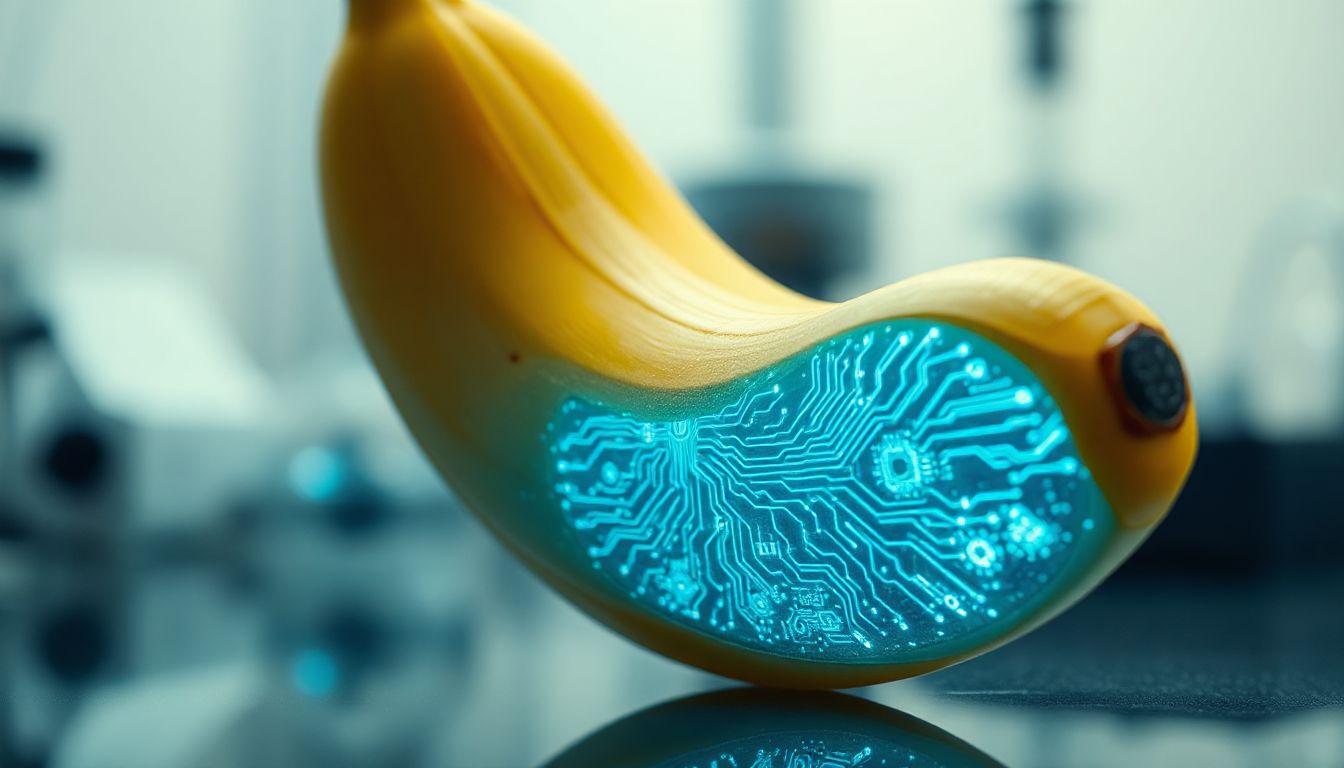
Nano Banana AI: Unlocking the Future of Micro-Scale Artificial Intelligence
Artificial intelligence is changing quickly. It pushes limits and brings to life things once only in stories. One exciting new area is very small, efficient AI models. These models can work on devices with limited power and space. This growing field, often called “nano AI,” could change edge computing, tiny robots, and smart clothes. At the front of this mini revolution is Nano Banana AI. This is a concept or new way of thinking. It aims to deliver great performance using very little computer power. This article will look into what Nano Banana AI is, what it can do, its challenges, and what kind of future it might bring.
What is Nano Banana AI?
This section defines and explains the main idea of Nano Banana AI. We will see how it differs from other types of AI we know today.
Defining the “Nano” in AI
The word “nano” here means tiny. It refers to very small sizes, low power use, and limited computing power. Think of AI that fits into a small device. This is very different from big AI models, like large language models (LLMs). Those need huge computers and lots of energy. Nano AI is about making smart systems that work with very little. It brings powerful thinking to small places.
The “Banana” Analogy: Understanding the Architecture
The “Banana” part of Nano Banana AI could mean a few things. It might point to a special design for its structure. Maybe it’s a new way to train the AI. Or it could be about how it handles data to make it super small and fast. Imagine a design that is simple, strong, and easy to use. Like a banana, it could be a self-contained unit, offering its power without complex setups. This could involve making neural networks smaller or using smart ways to store information.
Core Principles and Design Goals
Nano Banana AI is built on key ideas. It aims for extremely low power use. It needs very little memory. The AI must be super fast at guessing answers on tiny devices. Plus, it might even learn new things right there on the device. These goals help make AI practical for almost any small electronic item. It moves AI brains closer to where the action happens.
Applications of Nano Banana AI
Nano Banana AI can do many great things. It can change different industries and how we live.
Edge Computing and IoT
Nano Banana AI can make edge devices much smarter. These are things like sensors, smart home items, and factory machines. They can do complex AI tasks right where they are. This makes things faster and means they don’t always need to talk to the cloud.
- Real-time Anomaly Detection: Imagine machines in a factory spotting problems before they get bad. Or smart financial tools catching fraud the moment it happens. This AI works fast on the spot.
- Smart City Infrastructure: Think about AI helping manage city traffic better. Or small sensors watching air quality and keeping public places safe. These systems run on very little power.
Wearable Technology and Health Monitoring
Small AI can make smartwatches, fitness trackers, and medical tools much better. It can watch your health all the time.
- Personalized Health Insights: Your device could watch your body data all day long. It might spot early signs of illness. Then, it can give you tips just for you to stay well.
- Proactive Health Interventions: This AI might notice small changes in how you act or feel. It could then send alerts or adjust your daily plans. This helps you stay ahead of health issues.
Robotics and Autonomous Systems
Nano Banana AI is a big step for small, nimble, and power-saving robots. It helps them think better on their own.
- Micro-Robotics for Medical Procedures: Imagine tiny robots moving inside your body. They could deliver medicine exactly where it’s needed. They might even help with surgery that needs very small cuts.
- Drone and Autonomous Vehicle Control: This AI allows small drones to make smarter choices on their own. It can also help special parts of vehicles work better without a driver.
Technical Challenges and Innovations
Making and using Nano Banana AI comes with big hurdles. Still, many smart new ideas are helping us overcome them.
Model Compression and Optimization
We need ways to shrink AI models a lot. This also means making them need less computer power. Scientists are finding clever tricks to do this.
- Quantization: This means making the numbers inside the AI model simpler. It’s like using fewer colors to draw a picture, but it still looks right. This saves a lot of space.
- Pruning: We can cut out the parts of the AI that aren’t really needed. Imagine trimming a bush to make it healthier and smaller. This gets rid of wasted connections.
- Knowledge Distillation: A big, smart AI can teach a smaller, simpler AI. The little AI learns from the big one. It becomes smart like its teacher but takes up less room.
Hardware Efficiency and Design
Special computer parts are a must for these tiny AI models. They need to run efficiently.
- Neuromorphic Computing: These chips work like a human brain. They use much less power to do AI tasks. They are built for learning and working fast with less energy.
- Low-Power Processors: New microchips and AI chips are being made for very low power use. They are perfect for small, battery-powered devices. The market for these edge AI hardware parts is growing fast. These small solutions use way less power than big AI chips.
Data Efficiency and On-Device Learning
Training AI with little data on devices that aren’t super powerful is tough. But new methods are helping.
- Few-Shot Learning: Some AI can learn a lot from just a few examples. It’s like a child learning a new word after hearing it just once or twice. This saves time and data.
- Federated Learning: This lets many devices learn together without sharing all their private data. The AI model gets better on each device, then shares what it learned in a safe way. You can also try taking pre-trained models and fine-tuning them for new tasks with only a little bit of new data. This is a smart way to get the most out of what you have.
The Future Landscape of Nano Banana AI
Let’s look ahead at how Nano Banana AI could change our lives and technology.
Scalability and Accessibility
Nano Banana AI could become very common. It might be in almost every everyday item we use.
- Democratization of AI: This means fancy AI can be put into cheap devices. More people can then use powerful AI tools.
- Ubiquitous Intelligence: Picture a future where nearly every connected thing has some smart brainpower. Your fridge, your shoes, even your door might have a bit of AI helping out.
Ethical Considerations and Security
When tiny AI is everywhere, we need to think about right and wrong. We also need to keep it safe.
- Privacy Concerns: Even if data stays on your device, who controls that AI? What happens if it makes mistakes? These small systems still touch personal info.
- Security Vulnerabilities: Tiny AI systems built into devices could become new targets for bad actors. We must make sure these small brains are safe from attacks. Experts in AI ethics warn that we must design these systems with privacy and security in mind from the start.
Research Directions and Emerging Trends
Scientists are always looking for what comes next. Here are some ideas for where Nano Banana AI might go.
- Self-Sustaining AI: Imagine AI that keeps learning and changing without needing much help from outside. It would be like a system that grows smarter on its own.
- Bio-Inspired AI Architectures: Researchers are still looking to nature, like the human brain, for even better ways to make AI use less power and work smarter.
Conclusion
Nano Banana AI marks a big shift in artificial intelligence. It moves us toward smart systems that are very efficient and small. The things it could do are huge. It promises to make our tech better, improve our health, and push new ideas in robots and smart devices. There are big technical and ethical problems to solve. But ongoing work in making models smaller, improving hardware, and new ways of learning data are preparing the way. We are heading for a future where strong AI can live in the smallest devices. Using these new tools wisely will be key to getting all the good out of this exciting time for intelligence.